
Some mornings, the mind begins its work before we have even opened our eyes. A conversation from yesterday returns. Tomorrow's responsibilities arrive early. We reach for the phone, and the quiet of the morning disappears. Meditation offers another way to begin: not by escaping our life, but by meeting it with a little more space inside us.
You do not need an unusually peaceful mind to start. You do not need special clothing, a perfect room or hours of free time. You need a few unhurried minutes and a willingness to notice what is happening. The breath is here. The body is here. For this moment, you can be here too.
In the spiritual traditions of India, meditation is often spoken of as dhyana. It is a deepening of attention, an invitation to become less caught in the movement of thought and more intimate with the experience of being present. The reflections below explore that invitation in everyday English, with practical ways to begin and continue.
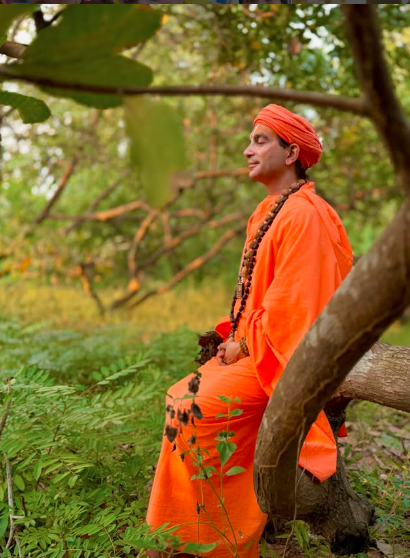
What meditation really means
Meditation is not the same as thinking carefully about a subject. Nor is it simply making the mind blank. In a basic practice, you choose a gentle anchor — perhaps the breath, a sound or the sensations of the body — and return to it whenever attention wanders. That repeated return develops steadiness without demanding that thoughts disappear.
Patanjali's eight-limbed account of yoga distinguishes dharana, the gathering of attention around an object, from dhyana, a more continuous flow of attention towards it. For a beginner, this distinction need not become another test to pass. Learning to sit, notice and return is already a meaningful foundation.
Quietness may come, but it cannot be ordered into existence. Think of muddy water in a glass. Shaking the glass to make it clear only keeps the mud moving. Meditation invites us to stop adding unnecessary struggle. Some days the water settles; on other days we simply learn to hold the glass more gently.
Why make room for stillness?
Much of a busy day is spent reacting. A message arrives, and we answer before considering our words. A worry appears, and we follow it through ten imagined outcomes. A small disagreement becomes an evening of rehearsed arguments. Meditation can help us recognise these movements as they begin, rather than noticing them only after they have carried us away.
The aim is not to become indifferent. It is to make room for a wiser response. You may still feel frustration, sadness or uncertainty. What can change is your relationship with those feelings: a pause before speaking, a little less haste, a greater ability to listen to someone without preparing your reply.
Some people find that regular practice supports relaxation and emotional balance. Experiences differ, and no result is guaranteed. A difficult life situation remains real even when we sit quietly. Meditation belongs alongside practical action, supportive relationships and appropriate professional care, not in place of them.
Sakshi: learning to notice without being swept away
Within Vedanta, sakshi means the witness: the awareness through which changing experiences are known. This is a spiritual way of understanding consciousness, not a scientific claim that a short sitting will prove. As a practical starting point, notice the difference between being absorbed in a thought and recognising that a thought is present.
Instead of saying, 'I am a failure,' you might notice, 'A harsh judgement is appearing.' Instead of immediately obeying an anxious prediction, you can recognise, 'The mind is imagining what might happen.' The circumstances still deserve your attention, but the thought need not become the whole truth about you.
Witnessing does not mean becoming cold towards your own heart. If grief is here, acknowledge it. If you have hurt someone, take responsibility. Awareness becomes valuable when it makes us more honest and compassionate, not when it gives us a spiritual reason to avoid uncomfortable feelings.
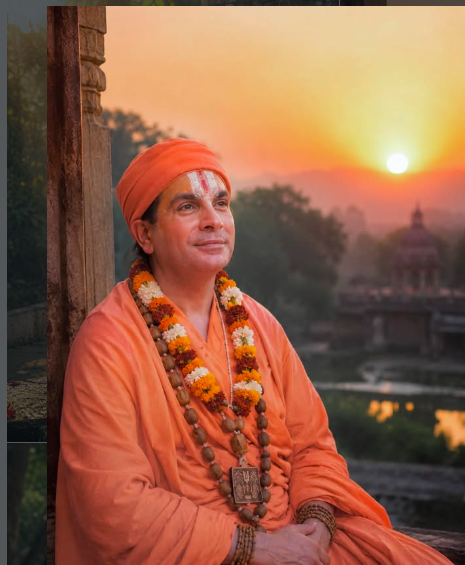
A comfortable seat and an ordinary breath
Choose a place where you are reasonably unlikely to be interrupted. Sit on a chair with your feet supported, or on a cushion if that suits your body. A cross-legged posture is not a requirement. Let the spine be comfortably upright, the shoulders easy and the hands resting naturally. Pain is not evidence of spiritual progress; adjust your position when needed.
You may close your eyes, keep them open or rest your gaze on a neutral point. Feel the contact of your body with the seat. Listen briefly to the sounds around you. There is no need to make the room perfectly silent. The purpose is to arrive where you are, rather than waiting for ideal conditions.
Then notice one simple part of breathing: air at the nostrils, the movement of the chest or the rise and fall of the abdomen. Allow the breath to remain natural. This practice does not require breath-holding, forceful breathing or deliberately slowing every breath. If attending to breathing feels uncomfortable, use sounds or the feeling of your feet on the floor instead.
When the mind wanders, return kindly
Sooner or later, you will discover that you have been planning lunch, remembering an old friend or composing a reply to someone. This is not a broken meditation. It is the ordinary behaviour of a mind that has spent years moving from one thing to the next. The important moment is the moment you notice.
You can silently name the movement with a simple word — 'thinking', 'planning' or 'remembering' — and return to your anchor. Do not turn the label into a running commentary. One gentle recognition is enough. There is no punishment to administer and no lost minute to recover.
Restlessness, sleepiness and impatience can also appear. If you are tired, try sitting at a different time or keeping your eyes open. If your body is uncomfortable, move. If you are restless, shorten the sitting. A practice that respects your actual condition is more sustainable than one built around an imaginary ideal practitioner.
Mantra, walking and the many doorways of attention
Breath awareness is one doorway, not the only doorway. In devotional traditions, a familiar sacred name or mantra may become the anchor. Repeat it gently, aloud or inwardly, without straining for a special experience. If you have received a particular practice from a trusted teacher, follow that guidance rather than collecting several techniques at once.
Walking can also be an attentive practice. On a safe, familiar path, feel each foot meet the ground and notice the movement of your body. Keep your eyes open and remain aware of your surroundings. You are not trying to enter a trance; you are learning to be present while moving.
Some people find still sitting natural; others begin more comfortably with listening, walking or a few moments of prayer. Choose one simple approach and give it time. Constantly searching for the most powerful technique can become another form of restlessness. Sincerity and consistency matter more than collecting spiritual experiences.
Building a practice that fits a real life
Begin with five minutes if ten feels too much. Attach the practice to something that already happens: after washing your face, before your first cup of tea or when you return home. Put the phone aside and use a quiet timer if helpful. A small, repeatable appointment with yourself is better than a grand promise that soon becomes a burden.
For the first week, simply become familiar with sitting and returning. In the following weeks, extend the time only if it feels manageable. If you miss a day, resume at the next opportunity. You do not have to punish yourself with a longer session or begin your whole journey again.
After each sitting, take a moment before standing. Notice the room, feel your feet and ask what the next moment needs from you. Over time, reflect on your conduct rather than measuring how few thoughts you had. Are you listening more patiently? Are you noticing irritation earlier? Are you treating yourself and others with greater care? Those are more useful questions than whether you felt perfectly peaceful.

Meditation does not end when you stand up
A formal sitting is a place to practise, but daily life is where that practice finds its meaning. Before answering a difficult message, feel one natural breath. While eating, notice the first few mouthfuls without looking at a screen. When someone speaks, offer a moment of undivided attention. These are small acts, but they interrupt the habit of being everywhere except here.
In a life of seva, attention becomes care. Listening to a child, helping an elder or completing a responsibility honestly can express the same steadiness cultivated in silence. Meditation and service need not compete. One helps us notice the condition of our own heart; the other invites us to respond to the needs of the world.
Do not use spiritual practice to postpone a necessary conversation, a medical appointment or a practical decision. Stillness should help you meet life, not withdraw from everything difficult. A quiet mind and active hands can belong to the same person.
Gentleness, guidance and knowing when to pause
Meditation is not comfortable for everyone at every moment. If a practice brings up intense distress, panic, disturbing memories or a feeling of being disconnected from your surroundings, stop rather than forcing yourself through it. Open your eyes, look around the room and feel the support beneath you. A shorter practice or a different anchor may be more suitable.
If distress persists, seek advice from a qualified mental-health professional. Meditation is not a replacement for treatment, and you should not change prescribed care because of a spiritual article. An experienced teacher can support the practice itself, while clinical concerns belong with an appropriate health professional.
For everyone, a useful guiding principle is gentleness. You are not trying to conquer your mind. You are learning to relate to it with clarity and patience. Deep practice grows from that relationship, not from competition with yourself or anyone else.
Practice
How to begin today
- Set aside five to ten minutes in a reasonably quiet place. Put distractions out of reach.
- Sit comfortably on a chair or cushion. Keep your eyes open or softly closed, whichever feels safer and easier.
- Feel the support of the seat and allow your shoulders and jaw to soften.
- Notice your natural breath, or choose sounds or the contact of your feet with the floor as your anchor.
- When attention wanders, recognise it without criticism and gently return. Repeat as often as needed.
- Before finishing, notice your surroundings and take a moment to settle before standing.
- Carry one mindful pause into the day: before a reply, during a meal or while listening to someone.
There may be days when meditation feels spacious and days when it feels like sitting beside a very busy road. Both belong to the journey. Begin where you are, return when you remember and let the practice remain human. You are not leaving life behind. You are making room to inhabit it more fully, one ordinary moment at a time.
"Let each return to the present be an act of kindness, not a demand for perfection."
A reflection on practice